

Detergent Powder Agglomeration Line for Industrial Manufacturing
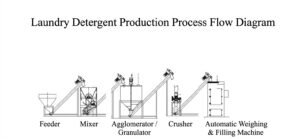
The modern Detergent Powder Agglomeration Line provides a brilliant automated solution for chemical factories. This engineering setup delivers a continuous operation from intake to final product packaging. First, a heavy-duty Feeder manages the metered feeding of solid raw materials. Next, a high-efficiency Mixer performs homogenous dry blending of the incoming multi-component powders. The core Agglomerator uses mechanical agitation with a liquid binder. Consequently, powder particles collide and agglomerate into dense, solid granules easily. Finally, a robust Crusher refines oversized lumps for immediate recycling, while the Automatic Weighing and Filling Machine executes precise terminal packaging.
Production Processes and Packaging for Laundry Detergent
Manufacturers mainly utilize two shaping processes for laundry detergent powder worldwide. These technologies include the high-tower spray drying method and the innovative agglomeration method. Specifically, the high-tower spray drying system mixes raw materials with water to create a free-flowing slurry. High-pressure pumps atomize this slurry into a large drying tower through top nozzles. Meanwhile, hot dry air rises from the bottom. The descending detergent droplets meet the rising hot air. Therefore, this counter-current contact dries the heavy slurry into hollow, free-flowing granules quickly.
Understanding the Advanced Agglomeration Technology
Conversely, the agglomeration method relies on distinct granulation mechanics and fluidization states. Factories classify this technique into mechanical agitation agglomeration and fluidized bed agglomeration. The system blends specific formulation ingredients in precise proportions. Next, granulation equipment forms these materials into dense, solid granules. A mechanical sieve filters the output immediately. Qualified granules proceed to the next stage. Meanwhile, the system crushes oversized lumps and recycles them back into the loop. Finally, conveyors move the high-quality finished product to the powder packaging machines.
Key Differences in Product Density and Energy
These two manufacturing processes exhibit major differences regarding product characteristics and energy consumption. For instance, the high-tower spray drying method produces hollow granules with low bulk density. This technique yields conventional regular laundry powder that dissolves rapidly in water. In contrast, the agglomeration method yields dense granules with high bulk density. This technology represents the primary choice for concentrated compact detergents. Furthermore, the spray drying method demands substantial thermal energy to evaporate water. The agglomeration method relies mostly on mechanical blending. Therefore, it requires very little heat and reduces carbon emissions significantly.
Automatic Powder Packaging System Integration
Modern powder packaging machines ensure smooth automatic packaging of free-flowing granular materials into small bags. This advanced machinery automatically performs bag forming, precise metering, filling, and secure sealing. Additionally, it handles final weighing and weight-sorting. The precise engineering protects overall product quality perfectly while maximizing daily factory output. Therefore, integrating this compact unit into your Detergent Powder Agglomeration Line optimizes long-term manufacturing efficiency.
Specifications
| Brand | JASUN |
| Function | Detergent Powder Agglomeration Line for industrial manufacturing, delivering continuous automated operation from intake to final product packaging |
| Main equipment | Heavy-duty Feeder for metered feeding of solid raw materials; high-efficiency Mixer for homogenous dry blending of multi-component powders; core Agglomerator using mechanical agitation with a liquid binder; robust Crusher refining oversized lumps for immediate recycling; Automatic Weighing and Filling Machine for precise terminal packaging |
| Agglomeration types | Mechanical agitation agglomeration and fluidized bed agglomeration; system blends formulation ingredients in precise proportions, granulation equipment forms dense, solid granules, a mechanical sieve filters output, qualified granules proceed, oversized lumps are crushed and recycled, and conveyors move finished product to powder packaging machines |
| Comparison with spray drying | High-tower spray drying mixes raw materials with water into a free-flowing slurry, atomized by high-pressure pumps into a large drying tower through top nozzles, where descending droplets meet rising hot dry air in counter-current contact to dry quickly into hollow, free-flowing granules with low bulk density, for conventional regular laundry powder that dissolves rapidly in water, but demands substantial thermal energy to evaporate water; agglomeration yields dense granules with high bulk density, the primary choice for concentrated compact detergents, relies mostly on mechanical blending, requires very little heat and reduces carbon emissions significantly |
| Packaging integration | Modern powder packaging machines automatically perform bag forming, precise metering, filling, and secure sealing for free-flowing granular materials into small bags, plus final weighing and weight-sorting, protecting product quality and maximizing daily factory output |
| Lead time | 30 days |
| Warranty | 12 months |