

How to Choose a Soap Production Line: Toilet Soap vs Laundry Soap
Choose your soap production line by answering three questions: what soap you will sell (toilet, laundry, or both), whether you will start from soap noodles or from oil, and what hourly capacity you need. Toilet soap lines (50–1000 kg/h) need refining and stamping for a smooth, branded bar, while laundry soap lines (50–3000 kg/h) are simpler and cheaper — and one combined line (50–1000 kg/h) can make both. If you are starting out, begin with one product and ready-made soap noodles, which needs no saponification plant.
Planning to start a soap factory? The first decision is learning how to choose a soap production line. You need to decide what kind of soap you want to produce. After all, soap is one of the oldest cleaning products in the world. If you want the chemistry, read the basics of soap on Wikipedia. Toilet soap and laundry soap look similar on the shelf. However, their production lines differ quite a lot in process, equipment, and investment. Choosing the wrong line is an expensive mistake — so read this guide to get it right.
Toilet Soap vs Laundry Soap: What’s the Difference?
Toilet soap (also called bath soap or beauty soap) is made for skin contact. It requires high-quality soap noodles or refined soap base plus precise milling. Then, stamping with polished moulds produces a smooth surface and a sharp logo. Consumers judge toilet soap by appearance, fragrance, and feel — so finishing equipment matters a lot.
Laundry soap is a workhorse product. It is usually made directly from oils and fats through saponification, extruded into long bars, and cut. Appearance matters less, but washing power matters more. As a result, the process is simpler and the equipment cheaper.
The Core Equipment of Each Soap Production Line
A typical toilet soap production line includes:
- Soap noodles machine or mixer (to blend noodles with fragrance and additives)
- Three-roll mill (to refine and homogenize the soap mass)
- Vacuum plodder / extruder (to remove air and extrude a smooth bar)
- Soap stamper (to press the bar into its final shape with your logo)
- Cutter and packing machines
A typical laundry soap production line includes:
- Saponification system (kettle or continuous line that turns oils into soap)
- Cooling and drying (to bring the soap to the right moisture)
- Extruder/plodder (to form bars)
- Cutter (often a multi-wire or rotary cutter)
- Stamping (simple, optional) and packing machines
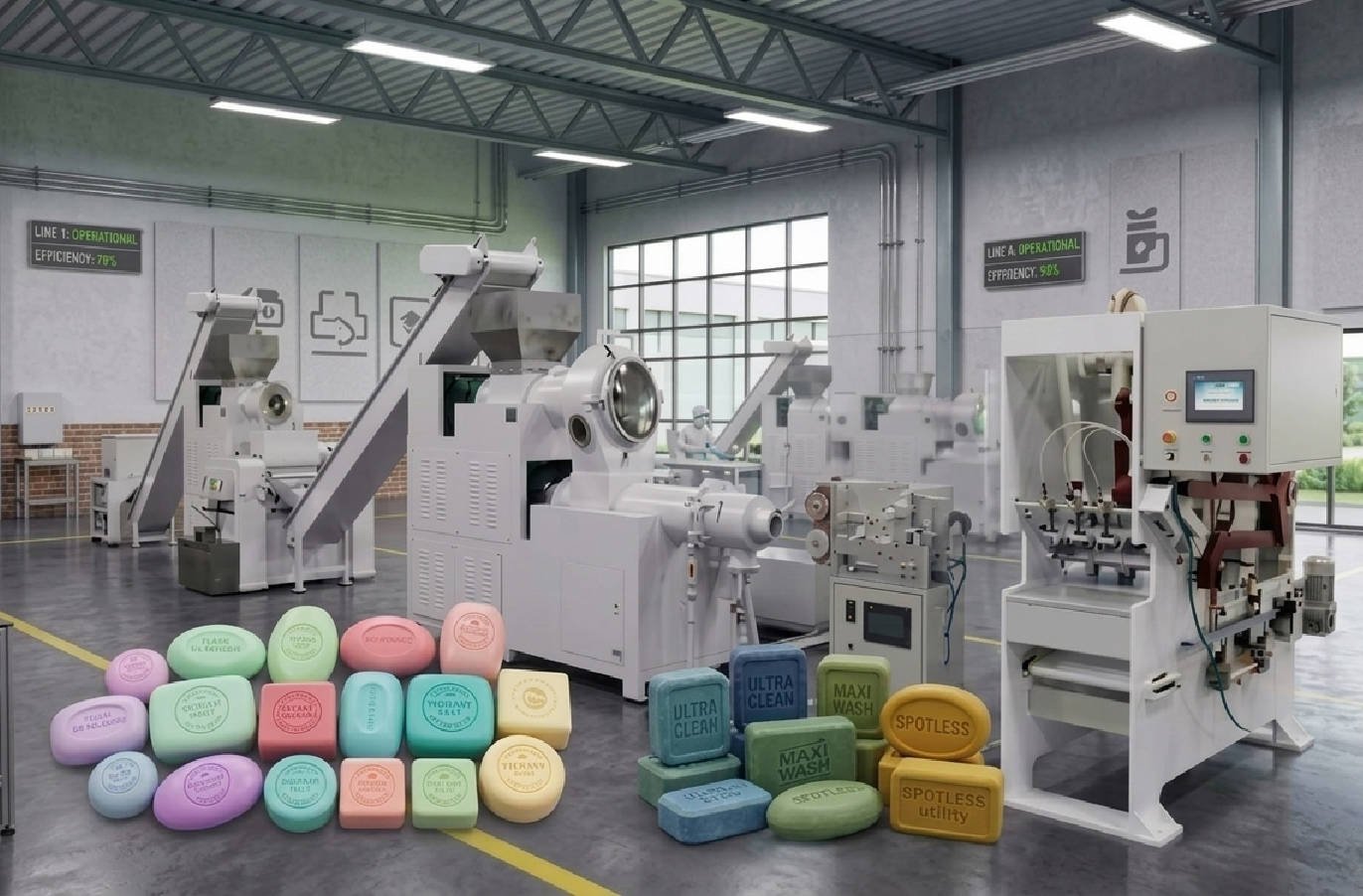
How to Choose a Soap Production Line: 3 Questions to Ask
To decide, ask yourself three questions:
1. Who is your customer? Households buying bath soap care about brand and appearance — invest in milling and stamping. If you sell to wholesalers or institutions buying laundry bars in bulk, keep the line simple and focus on capacity.
2. What is your raw material? If you can source good soap noodles locally, a toilet soap line based on noodles is faster to set up. However, with cheap palm oil, coconut oil, or animal fats available, a saponification-based laundry line gives you better margins.
3. What capacity do you need? Small lines start around 200–500 kg per day; medium lines run 1–3 tons per day; large plants go far beyond. Match the line to your realistic sales for the first two years, not your dreams. You can always add a second plodder or stamper later.
Can One Line Make Both?
Yes — with the right configuration. A saponification system plus plodder, cutter, and stamper can produce laundry bars. With a three-roll mill added, the same backbone can also finish toilet soap. As a result, many of our customers start with a dual-purpose line and specialize later. See our toilet soap production lines and laundry soap production lines. For a side-by-side spec comparison of all models, browse the complete soap production line range.
Final Advice
Don’t buy equipment before you answer the three questions above. A reputable manufacturer will ask about your raw material, target product, and capacity before quoting. If a supplier quotes you a “standard line” without asking, walk away. Contact us with your answers and we’ll recommend a configuration that fits, nothing more.
Frequently asked questions
Which soap production line is best for a beginner?
Start with one product and a small finishing line from ready-made soap noodles — noodles skip the saponification plant, so the investment and the workshop are both smaller. A combined line (50–1000 kg/h) is the flexible choice if you plan to make both toilet and laundry soap later.
Can I start from soap noodles instead of building a saponification plant?
Yes. A finishing line turns purchased soap noodles into finished bars with no chemical reaction on site, which is why we recommend noodles first for new or low-budget producers. You can add a saponification system later (batch 50–100 to 3000–5000 kg/h, or continuous 10–15 t/h) once sales justify it.
What is the smallest soap production line I can buy?
Our smallest line tiers start at 50 kg/h for toilet, laundry and combined lines, and the handmade soap line runs at a fixed 150 kg/h. For very small daily output, a small finishing line from noodles is the usual starting point.
How long does it take to get a line delivered and running?
Our standard lead time is 30 days, and an engineer can come to your factory to install the line and train your team, or guide your team remotely. Confirm the shipping time to your nearest port with your quotation, as it varies by destination.