
A soap refiner machine decides what the finished bar feels like. It sits in the middle of the finishing line — after the mixer, before the vacuum plodder. It turns mixed soap noodles into a dense, uniform mass. Get this stage wrong and no amount of good cutting or stamping will fix a rough, dull or cracking bar. This guide explains what a refiner does. It also explains how it differs from a three roll mill, and how to choose one — or both. For general background on how soap is made, see Wikipedia’s overview of soap.
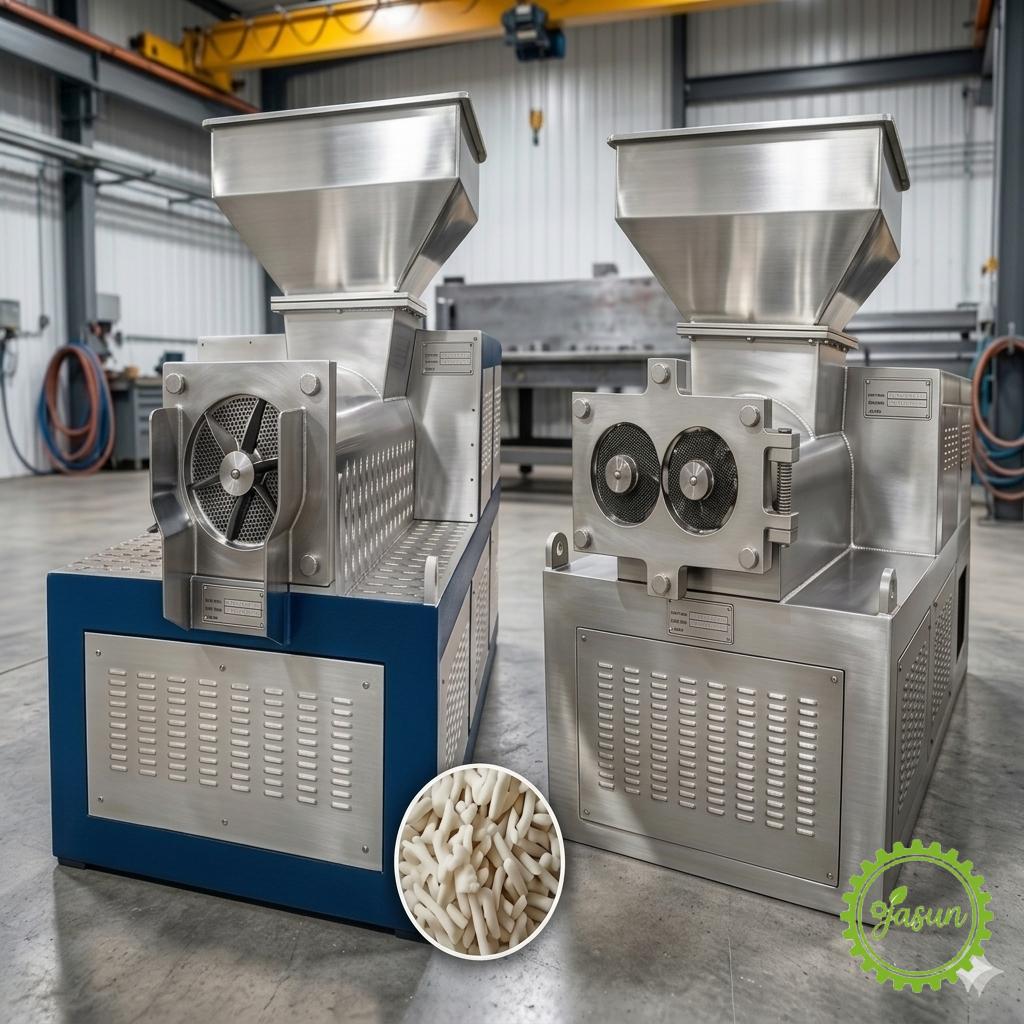
What a Soap Refiner Machine Does to Soap — and Where the Refiner and Mill Sit in the Line
Soap noodles leave the mixer mixed but not yet fully homogeneous. The refiner applies strong mechanical shear and compression to grind and homogenise that mass. This closes microscopic voids and increases the density of the soap matrix. Pelletising plates then extrude the refined material into high-density, uniform soap pellets. These pellets are the ideal feedstock for the plodder that follows.
The three roll mill does the second half of the same job: secondary mixing and refining. Its counter-rotating rollers run at differential speeds to generate intense compression and shear. A scraper blade then harvests the refined flakes for the vacuum plodder. The line runs in this order: mixer → refiner → three roll mill → vacuum plodder → cutting → stamping → packing. If you are buying a soap refiner, you are buying the density and gloss of the finished bar. You are not buying just another machine in the row.
Soap Refiner Machine, Three Roll Mill, or Both? How to Decide
Buyers often ask whether one machine can replace the other. In most finishing lines, they do different work on the same material.
- Choose a refiner first if your problem is uneven noodles, air pockets or a bar that lacks density. The refiner’s shear-and-compression pass and pelletising step make the mass uniform before the plodder takes it.
- Choose a three roll mill if your problem is surface finish: a dull, rough or streaked bar. Its adjustable roll gaps set the grinding intensity, and its chilled alloy rollers refine down to a fine finish.
- Choose both for premium toilet soap, where the buyer judges the bar by look and touch. For basic laundry bars, a refiner alone is often enough to start with. The mill can be added later when the range moves upmarket.
Ask your supplier to confirm which of the two your soap type needs before you order. The wrong choice is the most common reason a new line underperforms on bar quality.
Capacity Matching: Keeping Up with Your Mixer and Plodder
Refining equipment must keep pace with the machines on either side of it. A refiner that is too small becomes the bottleneck of the whole line. The mixer waits, the plodder starves, and hourly output falls below the capacity you paid for. A mill that is too large wastes power and floor space.
Match on throughput, not on nameplate size alone. Check the capacity of your mixer and vacuum plodder first. Then size the refiner and mill to that figure. As a reference point, Jasun’s laundry-line three roll mill carries a 300 kg capacity rating with a 4 kW drive. Its rollers measure 150 mm in diameter, and its footprint is 975 × 820 × 950 mm. Use figures like these to check the machine against your line. Confirm them for the exact model you are buying. For the refiner itself, ask the supplier for the throughput of the specific model in writing. This guide deliberately gives no refiner figures, because none have been confirmed for publication.
Roller and Screen Details That Affect the Finish
Small mechanical details decide the finish of the bar, so check them before you buy. The mill’s rollers should be hard, wear-resistant chilled alloy. Water cooling stops the soap overheating during long runs. Overheating changes colour and fragrance, and it shows on the bar. Adjustable roll gaps let the operator tune the grinding intensity for different soap types. On the refiner, the pelletising plates decide the size and uniformity of the pellets feeding the plodder. Ask how to change and clean the plates. A high-precision gear drive runs quietly with little vibration. Vibration shortens the life of the rollers and the frame. It is expensive to fix after installation.
Cleaning, Wear Parts and Maintenance
Refining machines handle sticky material all day, so cleaning and wear decide the real cost of ownership. Check that contact parts are food-grade. Check that the rollers, scraper blade and pelletising plates are easy to reach for daily cleaning. You can order wear parts — scraper blades, plates and seals — separately after delivery. Jasun’s product pages list both machines with a 30-day lead time and a 12-month warranty. Confirm the same two figures for any machine you buy.
Common Mistakes When Buying a Soap Refiner Machine
- Treating the refiner and the mill as interchangeable. They are complementary stages; skipping one to save money usually costs more in rejected bars.
- Sizing by the biggest number in the catalogue. Match the machine to your mixer and plodder, not to the largest capacity on offer.
- Ignoring the finish your market expects. Laundry bars forgive a rougher finish; toilet soap does not.
- Forgetting cleaning and changeover. If the plates and roll gaps cannot be reached and reset quickly, every product change becomes downtime.
Conclusion
A soap refiner machine and a three roll mill are the two machines for this job. They turn mixed noodles into a bar worth selling. Decide first whether your soap needs one or both. Size them to your mixer and plodder, and check the roller, cooling and cleaning details before you order. For a full view of the line they belong to, see the complete soap production line range.
To get a quotation, send your soap type and hourly capacity on WhatsApp +86-13937853263 or by email at [email protected].