Saponification Process Flow Diagram: |
Soap Process Flow Diagram: |
|
|---|---|---|
| [ Oils & Fats ] + [ Caustic Soda (NaOH) ] │ ▼ ┌───────────────────────────┐ │ 1. SAPONIFICATION │ ──► [ By-product: Glycerin ] │ (Heating & Chemical Reaction)│ └───────────────────────────┘ │ ▼ ┌───────────────────────────┐ │ Liquid Soap Base │ └───────────────────────────┘ │ ▼ ┌───────────────────────────┐ │ 2. VACUUM DRYING │ ──► [ Evaporated Water / │ (Instant Flash Evaporation)│ Steam ] └───────────────────────────┘ │ ▼ ┌───────────────────────────┐ │ Solid Soap Base │ └───────────────────────────┘ │ ▼ ┌───────────────────────────┐ │ 3. PLODDING & EXTRUSION │ │ (Mechanical Pelleting) │ └───────────────────────────┘ │ ▼ [ Final Soap Noodles ] |
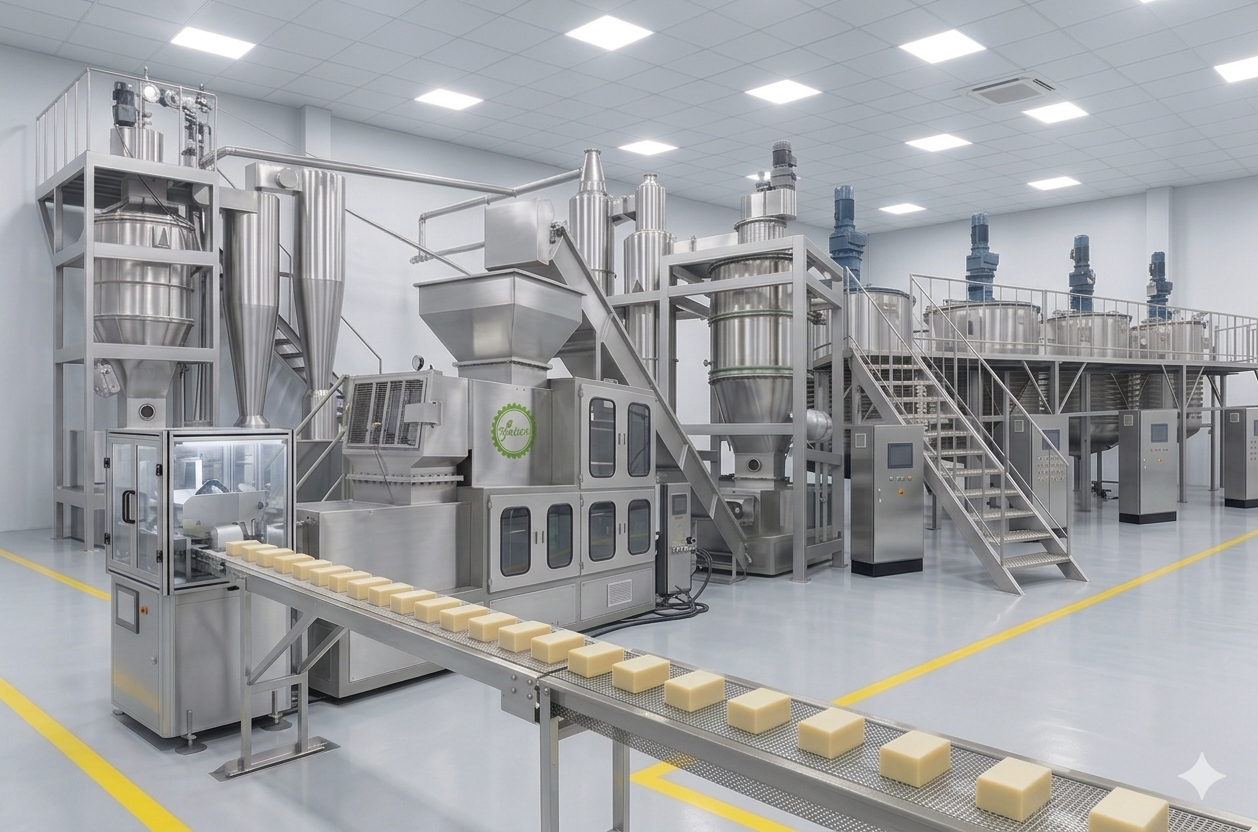
[ Soap Noodles ] + [ Ingredients ] (Semi-finished) (Silicate, Perfume, Color) │ ▼ ┌───────────────────────────┐ │ 1. MIXING │ │ (Dosing & Blending Ingredients)│ └───────────────────────────┘ │ ▼ ┌───────────────────────────┐ │ 2. MILLING │ │ (Three-Roll Mill Refining)│ └───────────────────────────┘ │ ▼ ┌───────────────────────────┐ │ 3. VACUUM PLODDING │ ──► [ Trapped Air │ (Duplex Plodder Extrusion)│ Removed ] └───────────────────────────┘ │ ▼ ┌───────────────────────────┐ │ Continuous Soap Bar │ └───────────────────────────┘ │ ▼ ┌───────────────────────────┐ │ 4. CUTTING & STAMPING │ │ (Shaping & Logo Embossing)│ └───────────────────────────┘ │ ▼ ┌───────────────────────────┐ │ 5. PACKAGING │ │ (Wrapping & Boxing) │ └───────────────────────────┘ │ ▼ [ Finished Laundry Soap ] |
Technological Process of Soap Noodle Production
The advanced technological process of converting oils and fats into premium semi-finished soap noodles consists of three consecutive engineering stages.
1. Saponification Stage
First, high-quality animal and vegetable oils or fats react chemically with a strong alkali, such as caustic soda (NaOH). This intensive chemical conversion occurs under continuous heating and high-speed agitation. Consequently, a uniform liquid soap base is formed. In addition, the valuable by-product, glycerin, is efficiently separated and recovered through a specialized salting-out process.
Inputs: Blend of natural oils/fats + Caustic Soda (NaOH).
Process: Thermal heating, mechanical stirring, and chemical conversion.
Output: Refined liquid soap base alongside separated glycerin.
2. Vacuum Drying Stage
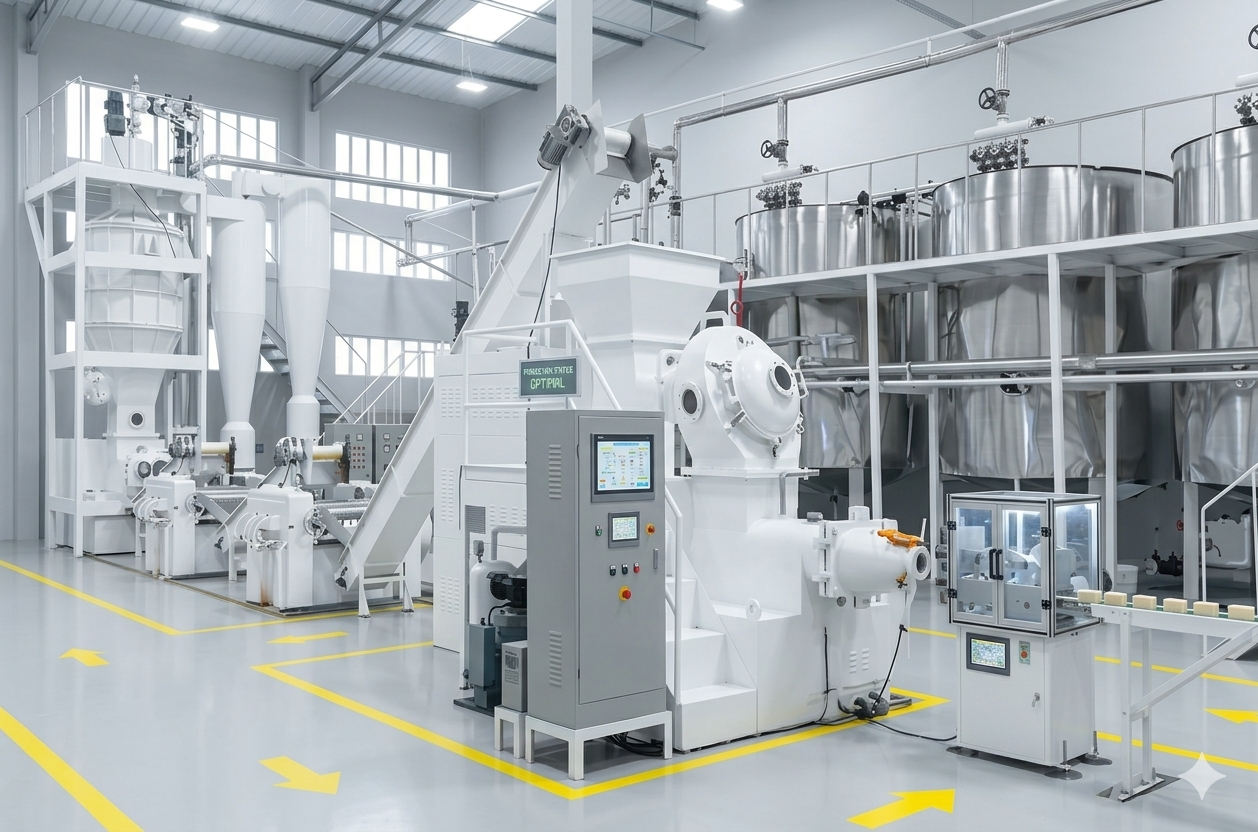
Subsequently, the liquid soap base is heated and sprayed directly into a heavy-duty vacuum dryer. Utilizing a low-temperature vacuum environment, the moisture evaporates instantly through flash evaporation. **Therefore**, the soap base undergoes rapid cooling and dehydrates into a premium solid state suitable for downstream molding. This advanced mechanism successfully protects the overall soap quality from thermal damage.
Mechanism: Spraying liquid soap into a high-vacuum chamber.
Flash Evaporation: Instant moisture evaporation at a significantly lower temperature.
Result: Rapid cooling and solidification into a high-grade solid soap base.
3. Plodding And Extrusion Stage
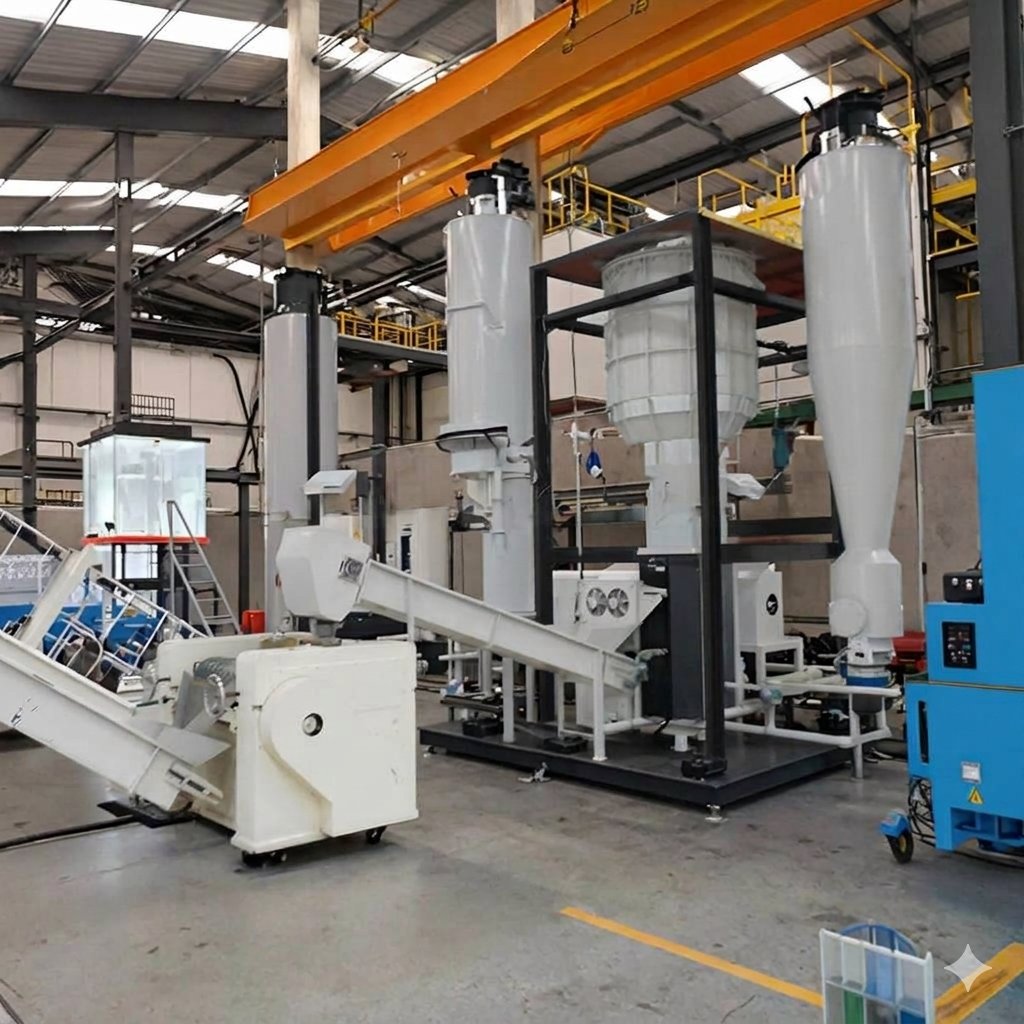
Finally, rotating blades scrape the solidified soap off the vacuum dryer walls. The scraped mass enters the powerful extruder, also known as a soap plodder, located at the bottom. **Moreover**, the machine mechanically compresses and extrudes the material through a dedicated matrix template. **As a result**, consistent, semi-finished soap noodles are generated, perfectly preparing them for subsequent milling and stamping.
Scraping: Rotating blades cleanly scrape the solid soap.
Pelleting: The plodder compresses and extrudes the mass.
End Product: Uniform, high-density soap noodles ready for final shaping.
Production Capacity Specifications
We provide flexible manufacturing solutions. Customers can select from our versatile batch options or high-capacity continuous lines based on factory demands:
| Saponification System Type | Available Production Capacities (Per Hour) |
| Batch Saponification Lines | 50 KG ~ 100 KG/H |
| Batch Saponification Lines | 300 KG ~ 500 KG/H |
| Batch Saponification Lines | 1000 KG ~ 1500 KG/H |
| Batch Saponification Lines | 3000 KG ~ 5000 KG/H |
| Continuous Saponification Lines | 10 Tons ~ 15 Tons/H |